Kristen French, “Can ‘Dante’s Inferno’ Tell Us Something About Space Rocks? (2026)
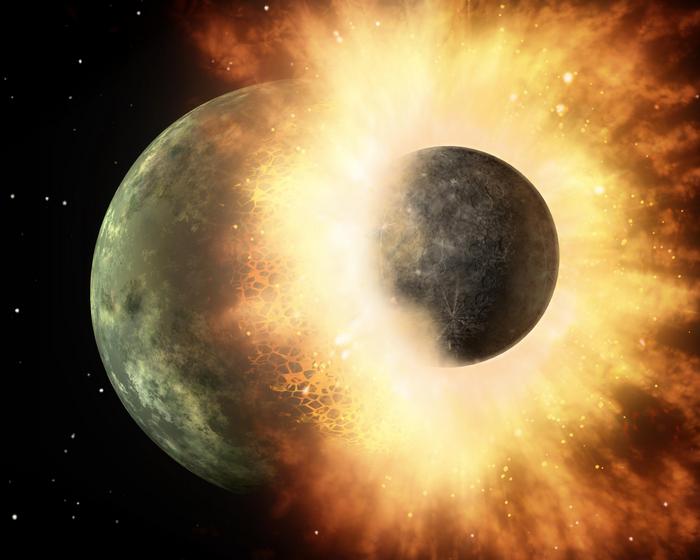
“An interloper recently crashed a European Geosciences Union conference: Timothy Burbery of Marshall University was the lone English professor among 18,000 geoscientists. He is also an expert in geomythology, or the study of how pre-scientific cultures used legends and myths to explain mysterious geological events, such as volcanoes, tsunamis, and fossils. Burbery came to the conference with a wild idea: Dante Alighieri’s The Inferno wasn’t just a 14th-century epic poem and literary masterwork. It presaged the modern science of falling space rocks by 500 years.
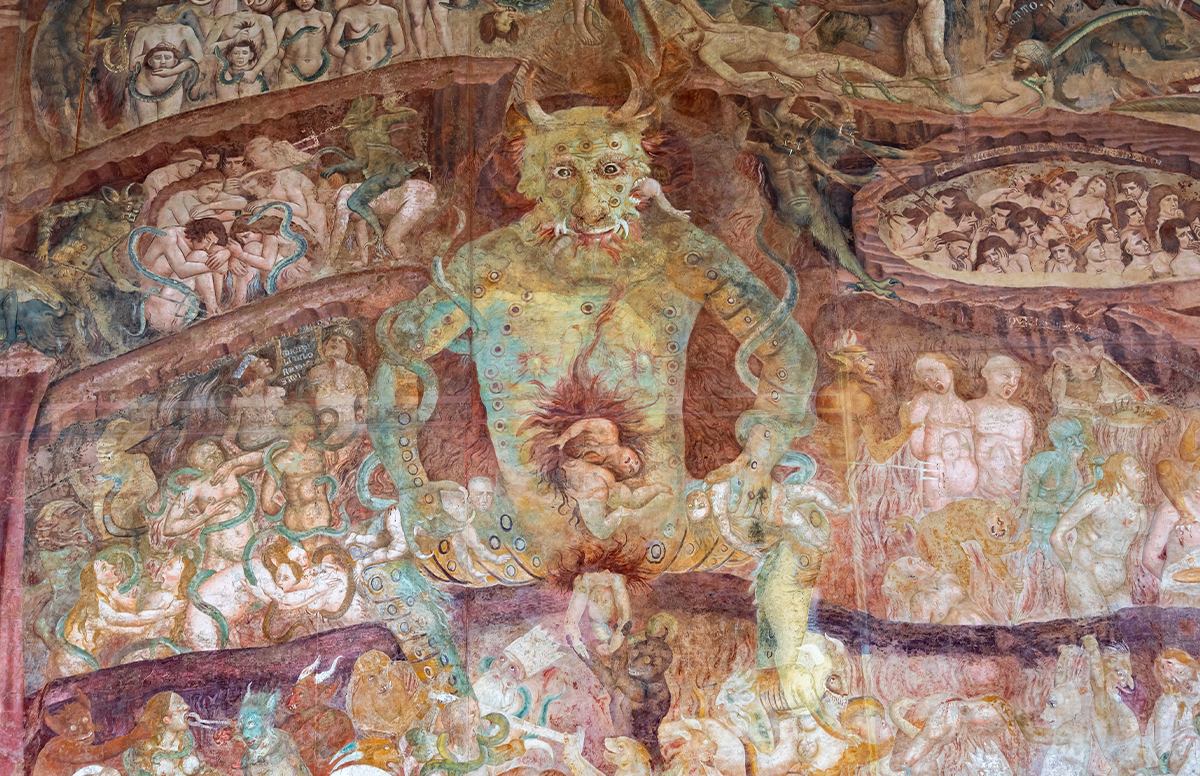
Dante’s story of Satan’s fall has long been read as an allegory of spiritual collapse, a long, hard descent from grace. Burbery doesn’t dispute that this spiritual slide is the central metaphor the Florentine master was working with, but he suggests that Dante may have been connecting spiritual processes to physical ones—the heavens to the cosmos, the Devil to a meteorite, and that perhaps he was the first to intuit what happens when a cosmic rock strikes the Earth.
Dante was a student of geology in his time, Burbery points out, and The Inferno features many real-world geological events, such as landslides and earthquakes. Dante may have imagined the Prince of Darkness as an oblong asteroid that tunneled to the center of the Earth, kicking up the Mountain of Purgatory, creating a multi-tiered impact basin—the nine circles of Hell—and setting off a chain reaction.
The idea has some tough critics. Burbery himself pointed me to a takedown of his argument by science writer Jason Colavito, who called it, ‘to put it mildly, insane.’ Colavito points out that the actual physics of asteroid impacts is inconsistent with what Dante describes, and the details he offers about the devil’s trip to the center of the Earth are, anyway, too slim. Any object large enough and moving fast enough to penetrate to the Earth’s core would destroy the entire planet, for example. ‘The atmosphere would likely be blown off, the oceans boiled away, and the planet would become a molten ball being reshaped around the impact. This is not what Dante described,’ Colavito writes. But Burbery counters that he didn’t intend to present Dante as a literal prophet, but rather someone who ‘was among the first to consider the geophysics of a big mass crashing to earth.’
I spoke with Burbery about the uses of geomythology, the power of the literary imagination, and what Dante may have gotten right. […]” —Kristen French, Nautil.us, June 18, 2026.
Read the full article here.
Sighting Citation:
“Kristen French, “Can ‘Dante’s Inferno’ Tell Us Something About Space Rocks? (2026).” Dante Today: Citings and Sightings of Dante’s Works in Contemporary Culture. Elizabeth Coggeshall and Arielle Saiber, eds. June 29, 2026. https://dantetoday.org/sightings/kristen-french-can-dantes-inferno-tell-us-something-about-space-rocks-2026/.